
As the leaves come down and temperatures drop, natural lawns across Essex start to look tired and patchy - and stay that way until spring. Between the mowing, feeding and reseeding, a natural lawn is hard enough work in summer; through autumn and winter, most of that effort produces very little in return.
Artificial grass is built to handle exactly this stretch of the year. Here are seven reasons it holds up through an Essex autumn and winter in a way a natural lawn simply can't.
Low Maintenance Through Harsh Weather
Autumn showers and winter frosts are exactly when a natural lawn demands the most attention and rewards it the least. Artificial grass removes that seasonal workload almost entirely.
| Task | Natural Lawn | Artificial Grass |
|---|---|---|
| Mowing | Still needed in mild spells | Never |
| Feeding & watering | Ongoing upkeep | None |
| Dealing with waterlogging | Frequent on Essex clay soil | Drains through |
| Keeping it usable | Brush off leaves and debris | Brush off leaves and debris |
Whatever the weather, a quick brush to clear leaves and debris is the only routine task left - a fraction of what a natural lawn needs over the same months.
Weather-Resistant & Durable
Artificial grass is built for the unpredictable weather Essex gets through the colder months - heavy rain, frost, and the odd bright winter afternoon that natural grass can't make the most of anyway.
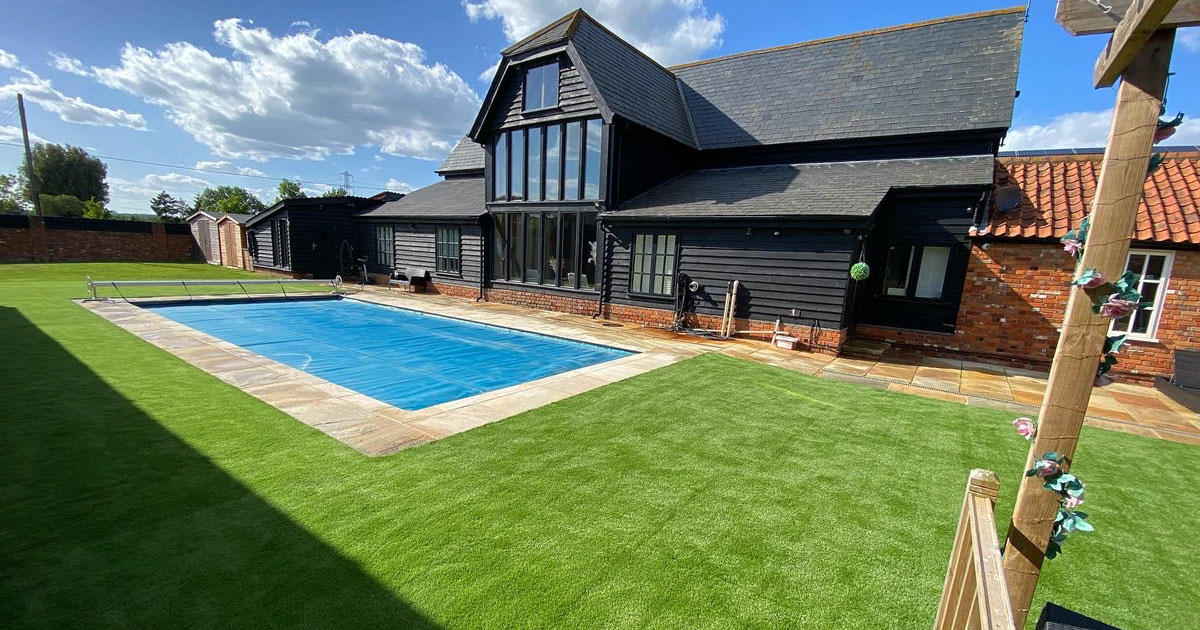
UV-resistant fibres also mean the lawn won't fade during the occasional low winter sun, so it looks just as good in January as it did when it went in.
No More Muddy Patches
Mud is the single biggest complaint we hear about natural lawns in autumn and winter - and on Essex's clay-heavy soil, it doesn't take much rain to turn a lawn into a mess, especially with children or dogs using it daily.
It's one of the most immediate, day-to-day differences homeowners notice after switching - not a long-term benefit you have to wait for, but something that changes from the very next rainy day.
Retains Its Colour All Winter
Natural grass typically fades to yellow or brown as the seasons turn, and stays that way until it comes back to life in spring. Artificial grass doesn't go dormant - it looks the same in December as it does in June.
| Season | Natural Lawn | Artificial Grass |
|---|---|---|
| Autumn | Starts thinning and yellowing | Stays green |
| Winter | Dormant, often muddy and brown | Stays green |
| Early spring | Recovering, patchy in places | Stays green |
That consistency matters most for gardens that are visible from the house or overlooked from the kitchen window - exactly the spot where a dormant, brown lawn is hardest to ignore for months at a time.
Safer for Pets & Children
Damp, frosty ground is when a natural lawn is at its most treacherous underfoot - and it's exactly when children and pets still want to be outside.
A Softer, Safer Surface
A cushioned, consistent surface reduces the risk of slips on a lawn that would otherwise be damp or frosty underfoot.
Easy to Clean After Muddy Walks
No mud to work into the lawn - even after your dog's been out in the rain, a quick rinse is all it needs.
Dries Faster Than Natural Grass
The garden is ready to use again shortly after the rain stops, rather than staying waterlogged for hours.
An Eco-Friendly Choice
Conserving water and avoiding harsh chemicals matters through autumn and winter as much as any other time of year, and artificial grass helps with both without any extra effort.
Ready to Use, Whatever the Season
A natural lawn often becomes unusable through the colder months - too boggy for a winter get-together, too muddy for the kids to play on. An artificial lawn stays exactly the same garden all year round.
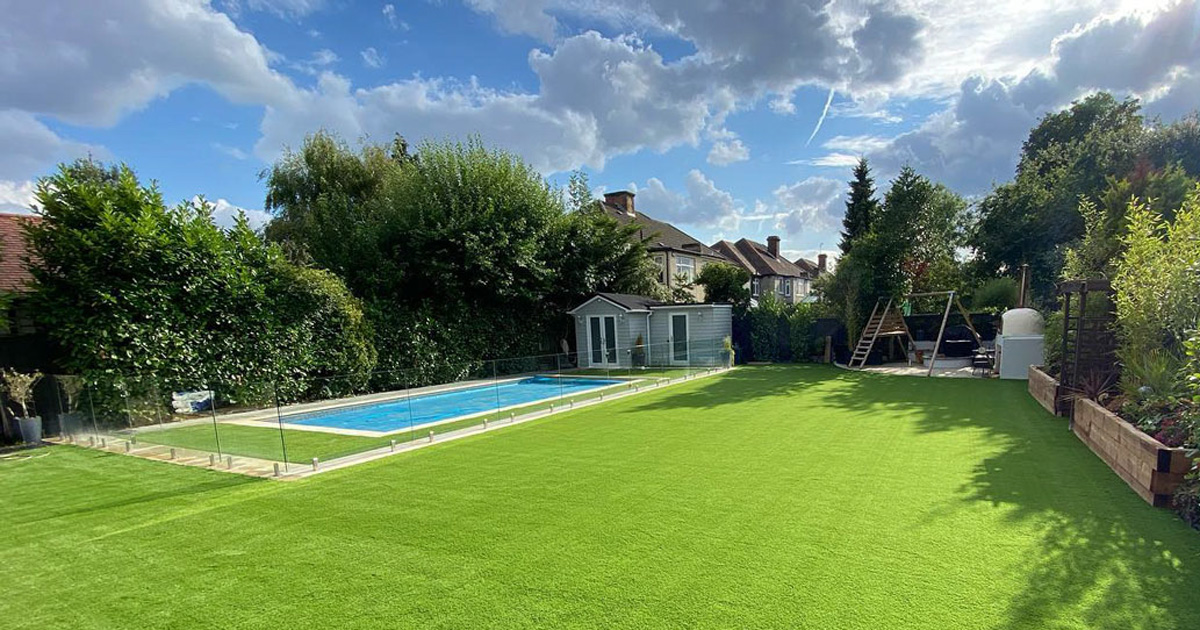
Whether it's a winter get-together, letting the kids out after school, or just wanting the garden to look kept without the effort, an artificial lawn is ready whenever you are - not just when the weather allows it.
Why Installation Matters Most in Winter
All seven benefits above depend on one thing: the lawn being installed properly in the first place. Winter is when a poor installation gets exposed - a badly drained lawn that pools water is arguably worse than the muddy natural grass it replaced.
Standing Water After Heavy Rain
We're occasionally called out to gardens where an artificial lawn holds puddles for hours after rain - almost always down to an inadequate sub-base or poor falls, rather than the grass itself. On Essex's clay-heavy soil, drainage has to be designed into the sub-base from the start, not assumed.
Done correctly, with a proper compacted sub-base and the right falls, an artificial lawn drains within minutes of the rain stopping - which is the whole point of choosing it for the wettest months of the year.
This is why our installation process pays particular attention to drainage and sub-base depth on every job, whatever the season it's installed in.