
Paving slabs are the default choice for patios and outdoor areas across Essex, but they're not the only one - and for a lot of homeowners and businesses, they're not the best one either. Slabs crack under frost, sink unevenly on soft ground, grow moss in shaded corners, and need re-pointing every few years to stay looking presentable.
This guide sets out seven alternatives we see chosen most often across Chelmsford, Basildon, Southend-on-Sea, Colchester and Brentwood, covering both residential gardens and commercial sites - what each surface is actually like to live with, and how to work out which one suits your space.
Why Look Beyond Paving Slabs
Slabs aren't a bad material - they're just a high-maintenance one, and the issues tend to show up gradually rather than all at once, which is why so many patios end up looking tired long before the homeowner planned to replace them.
| Common Slab Problem | Where It Shows Up | Why It Happens |
|---|---|---|
| Cracking and chipping | Around edges and high-traffic paths | Frost expansion in Essex's clay-heavy ground and repeated freeze-thaw cycles over winter |
| Uneven sinking | Individual slabs, usually near downpipes or drainage routes | Base wasn't compacted deeply enough, or water has washed out the bedding underneath |
| Weeds between joints | Every joint line, worse in sunnier spots | Pointing degrades over time and seeds find their way into the gaps |
| Moss and algae | Shaded, north-facing or overhung patios | Slabs stay damp for longer in low light, giving moss the conditions it needs |
| Fading and staining | Whole patio, most visible on lighter-coloured stone | UV exposure, algae and general weathering over several Essex summers and winters |
| Recurring maintenance cost | Every 3-5 years on average | Re-pointing, jet-washing and occasional slab replacement to keep the surface presentable |
None of this makes slabs the wrong choice outright - but it does mean the "low-maintenance patio" most people picture when they choose paving rarely turns out that way in practice.
The 7 Alternatives at a Glance
Each of the seven options below solves the slab problem differently. This table gives a quick comparison before we go into detail on each one.
| Surface | Best Suited To | Ongoing Maintenance |
|---|---|---|
| Artificial Grass | Family gardens, dog owners, low-maintenance commercial landscaping | Very Low |
| Block Paving | Driveways and patios wanting a defined, patterned look | Moderate |
| Resin Bound Gravel | Modern patios, pathways and commercial frontages | Low |
| Timber Decking | Raised areas, sloped gardens, a natural aesthetic | Moderate to High |
| Tarmac | Commercial car parks, industrial yards, large driveways | Low |
| Composite Decking | Decking aesthetic without the upkeep of timber | Low |
| Bark Chippings | Informal borders, play areas, rustic garden zones | Moderate |
There's no single "best" alternative - it depends on how the space is used, the budget, and how much upkeep you're prepared to take on. We'll go through each one in turn.
Artificial Grass: The Low-Maintenance All-Rounder
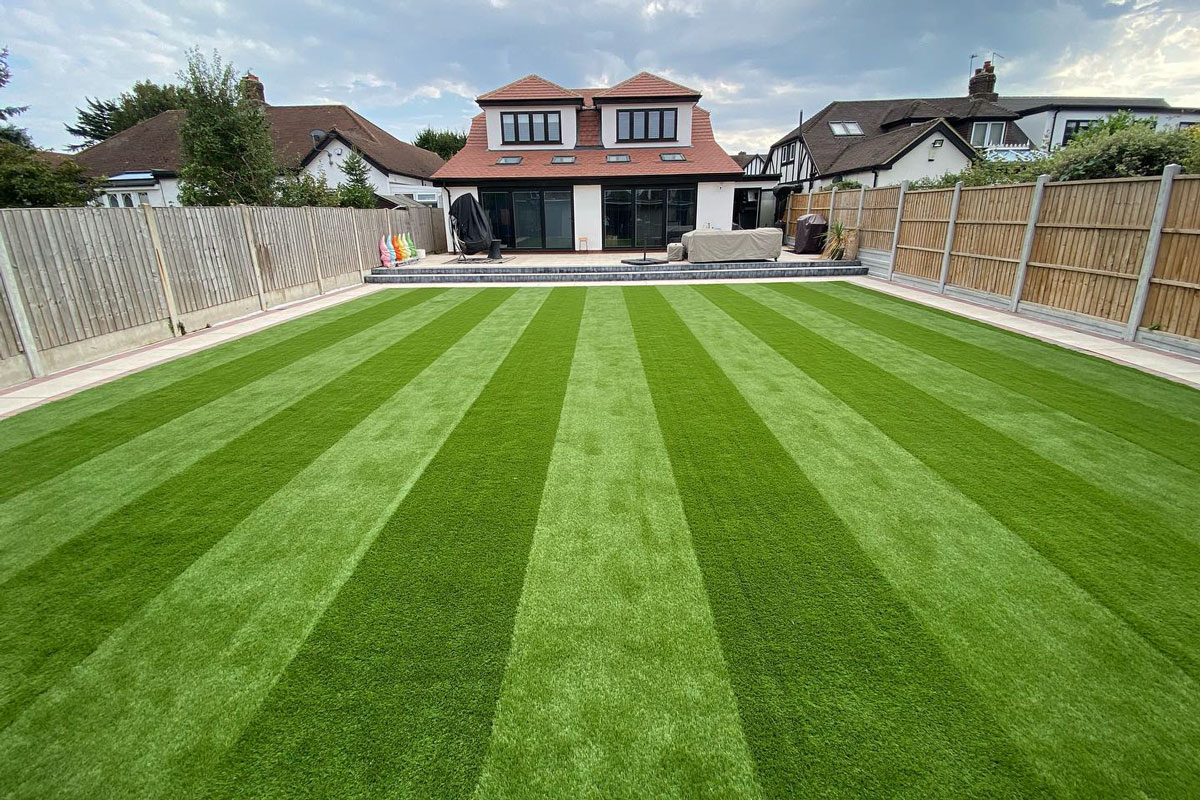
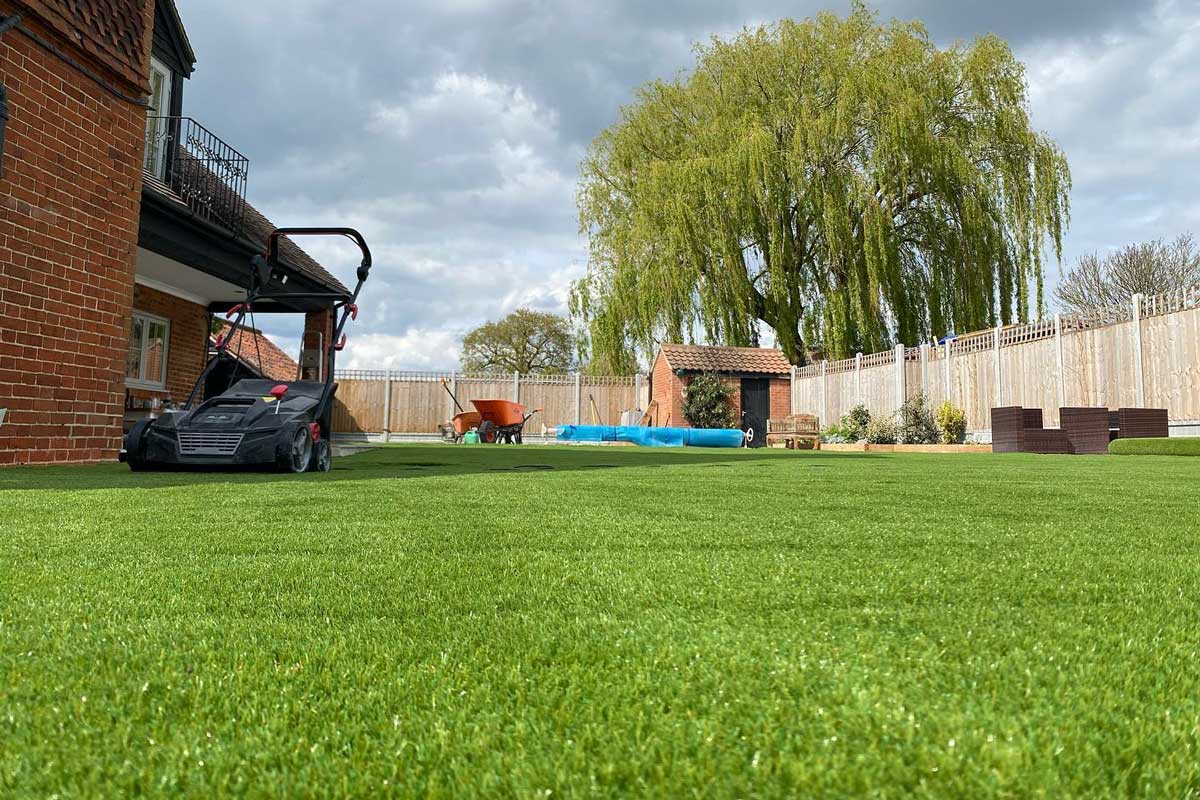
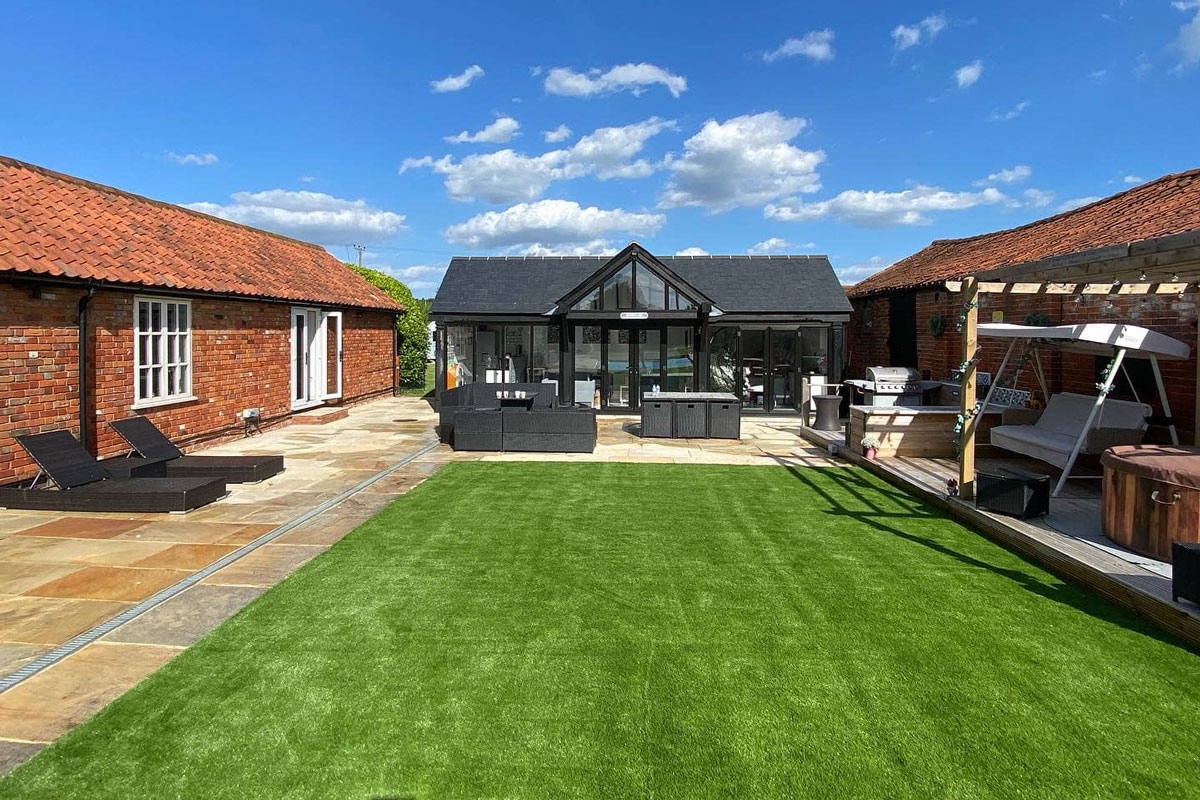
Of the seven options, artificial grass is the one we get asked about most, and it's the alternative we specialise in supplying and installing across Essex. Rather than replacing one hard surface with another, it swaps the maintenance cycle of a natural lawn or an ageing patio for a surface that's mown, weeded and watered precisely never.
No Mowing, Ever
There's no cutting, feeding or weekend maintenance routine to keep on top of - the lawn looks the same in January as it does in July.
Stands Up to Family & Pet Use
Correctly installed pile handles daily footfall and dog use without the muddy patches a stressed natural lawn develops.
No Weeds, No Moss
A permeable backing over a properly drained sub-base leaves nowhere for weeds to establish or moss to take hold.
Works for Commercial Sites
Consistent, presentable green space for offices, show homes and communal areas without ongoing grounds-maintenance contracts.
10-Year Product Guarantee
Every EAG installation is backed by a decade-long guarantee, giving a fixed, known cost rather than an open-ended one.
Drains Straight Through
Rainwater passes through the perforated backing into a properly built sub-base, rather than pooling on the surface the way ageing slabs can.
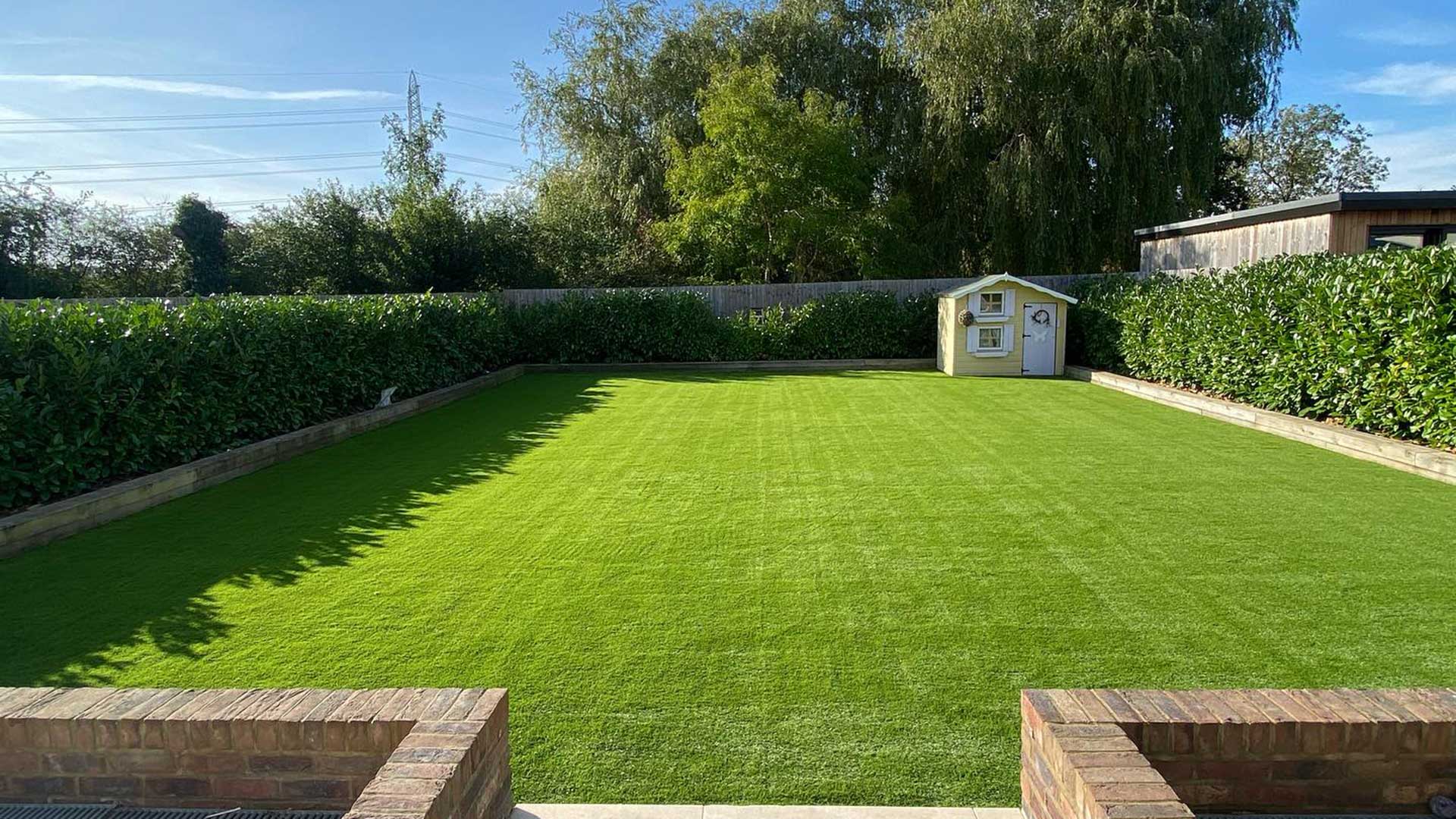 Colchester
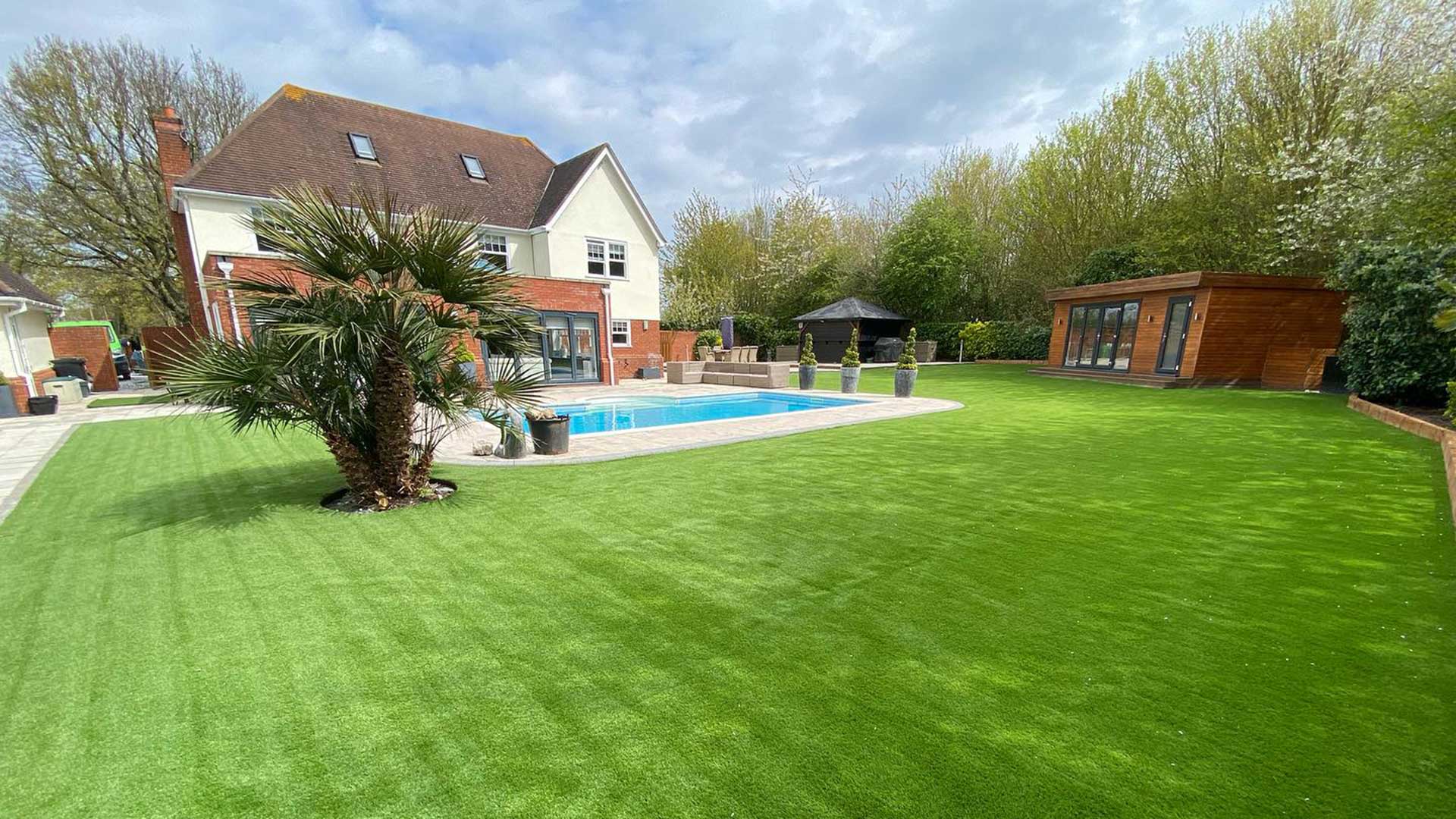 Chalkwell
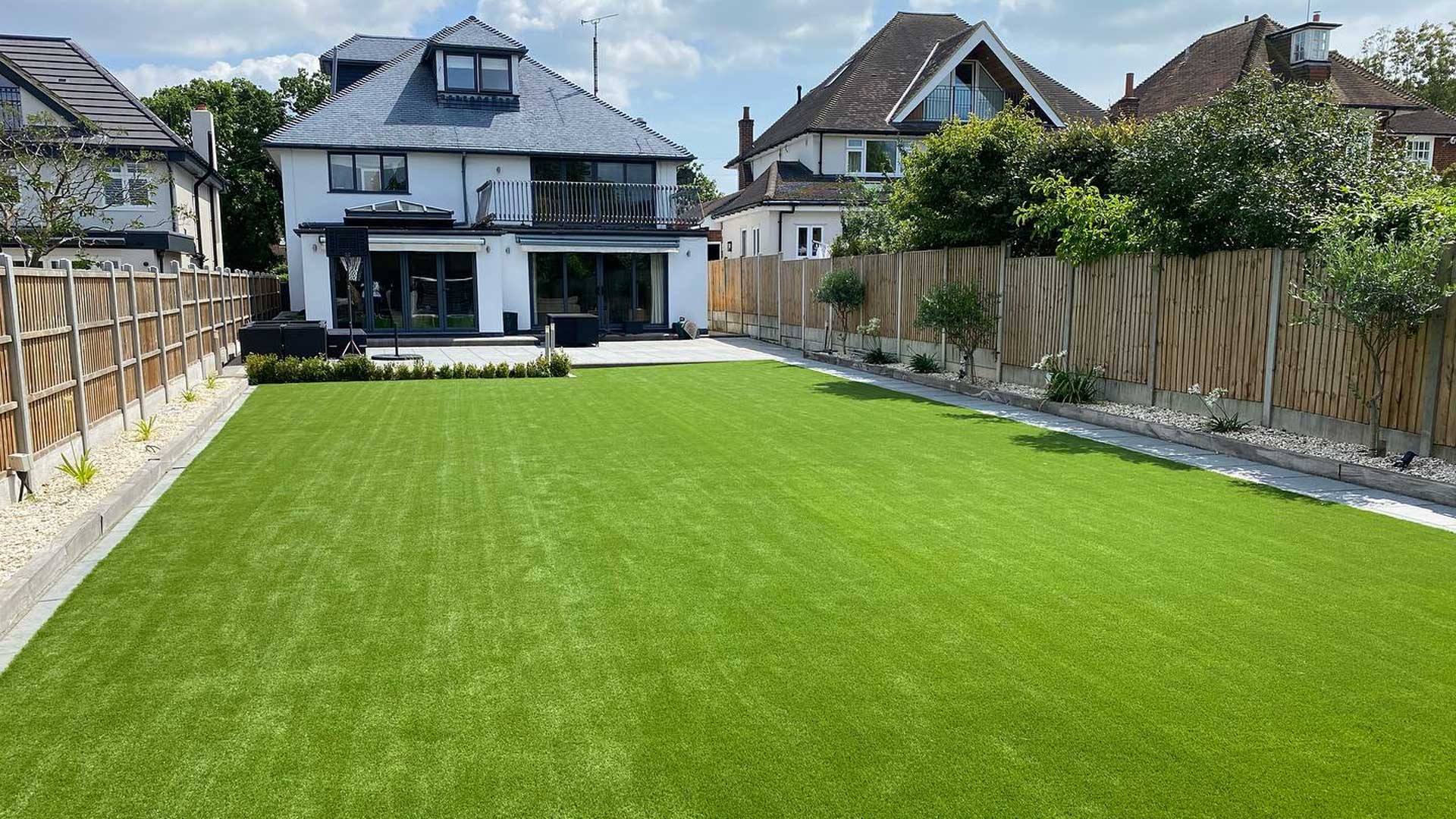 Laindon
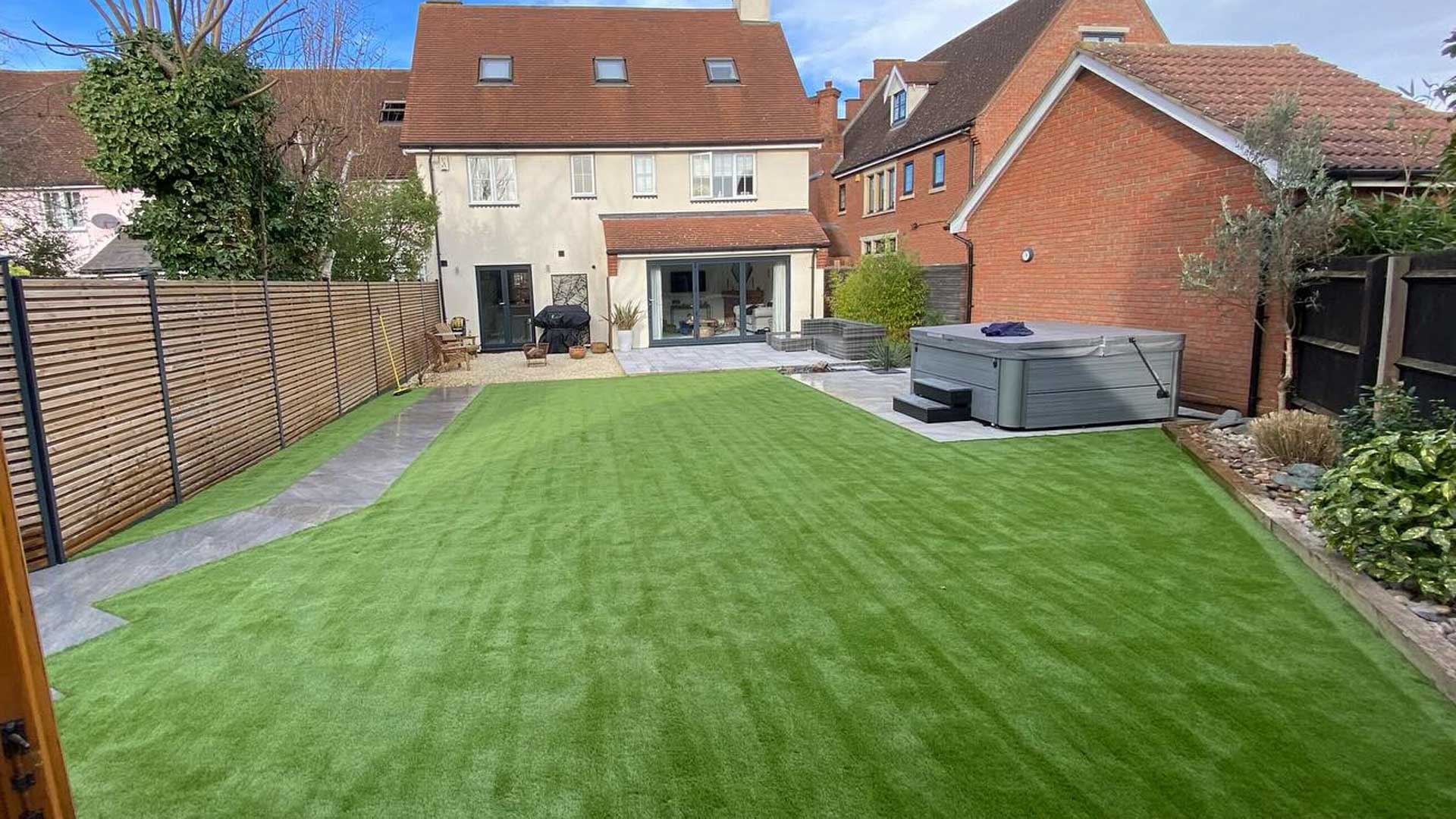 Rayleigh
 Grays
Grays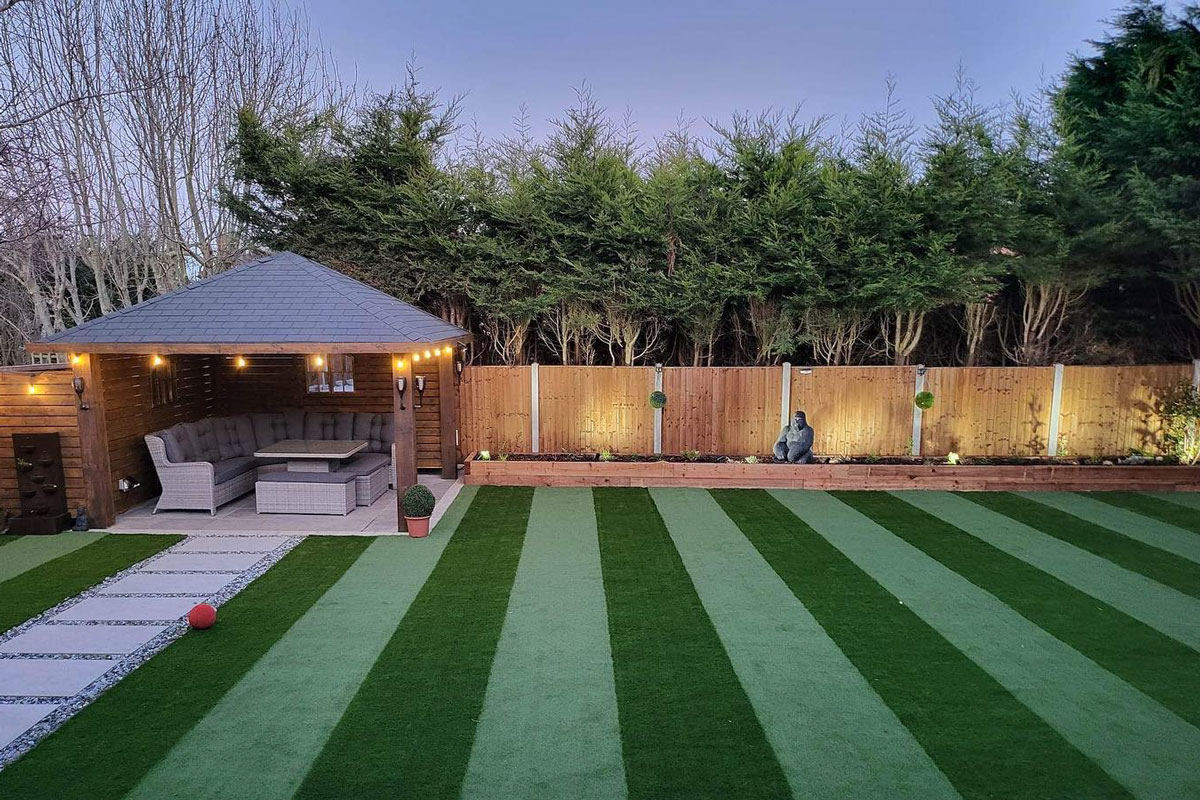 Basildon
 Billericay
 Romford
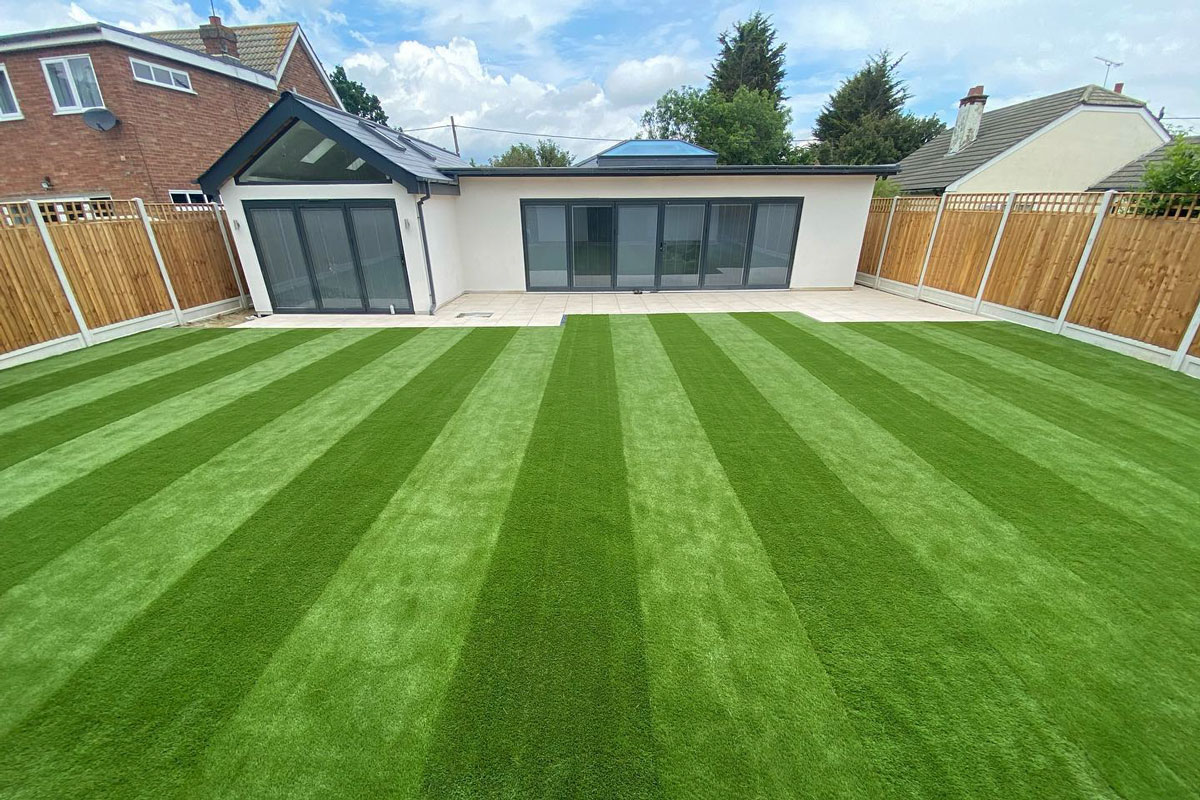 Southend
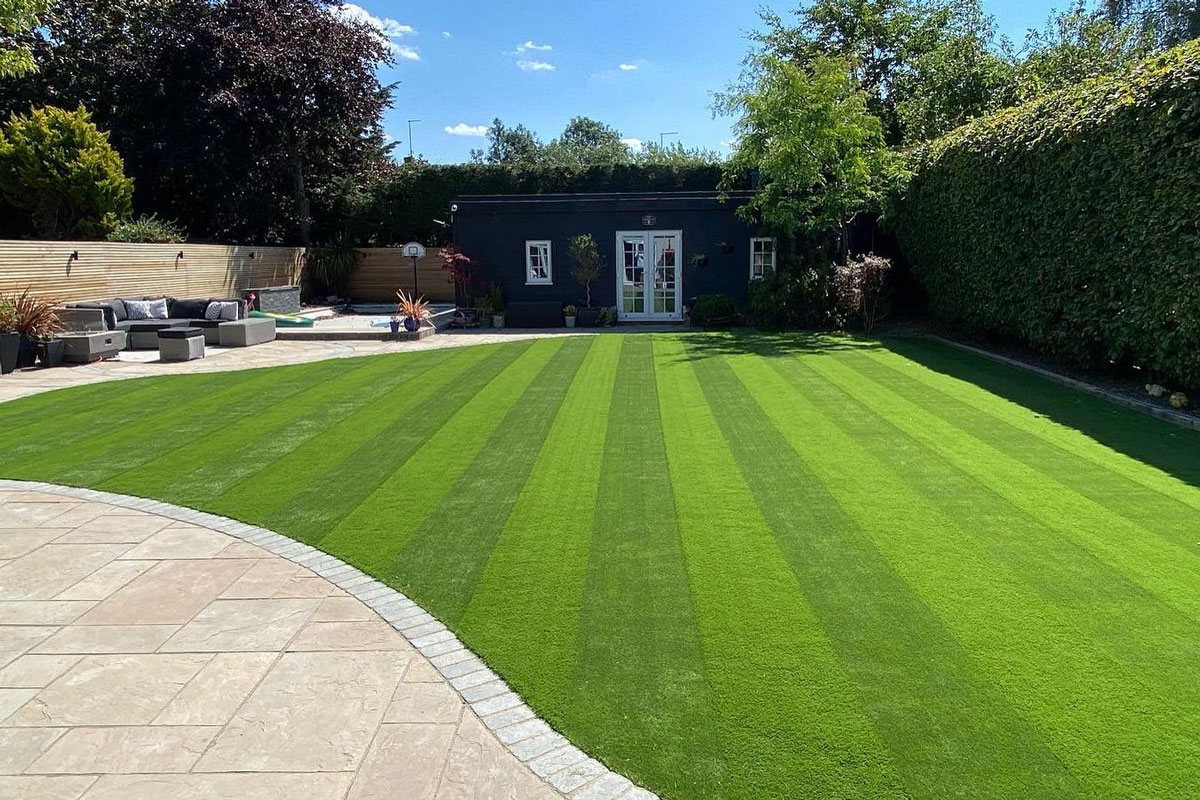 Upminster
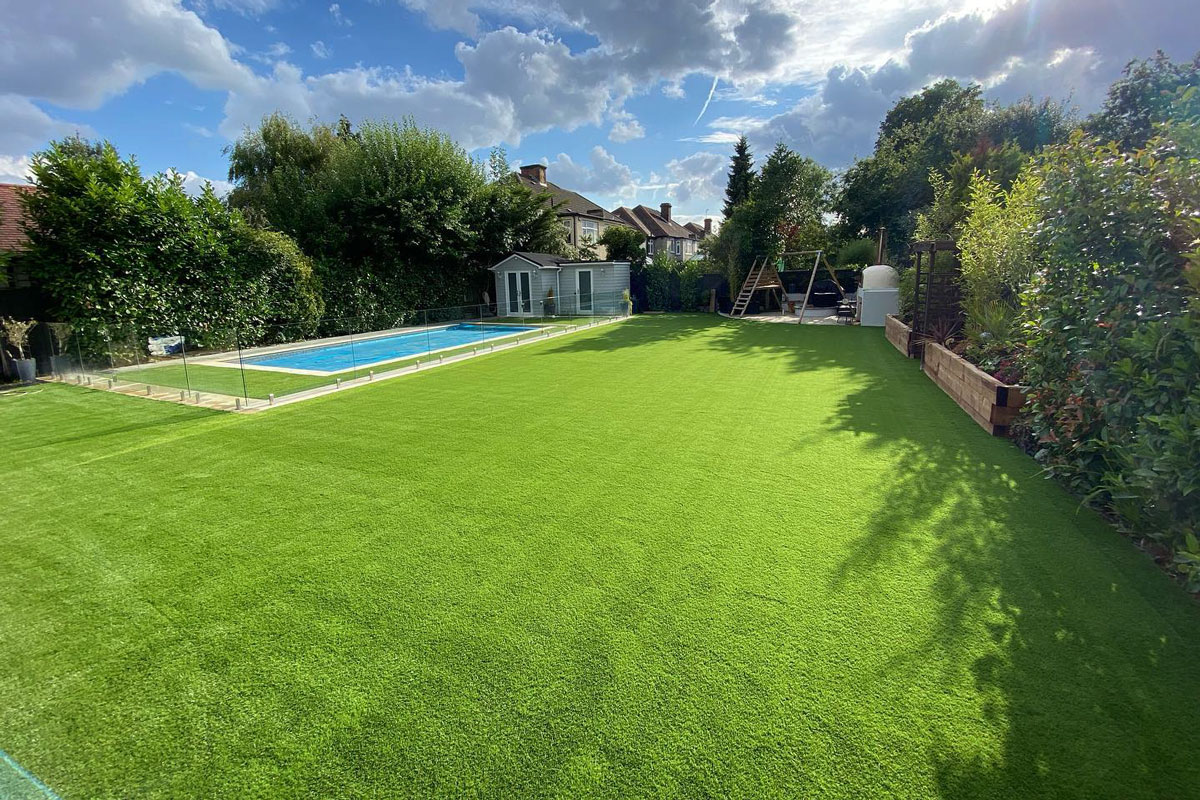 Hornchurch
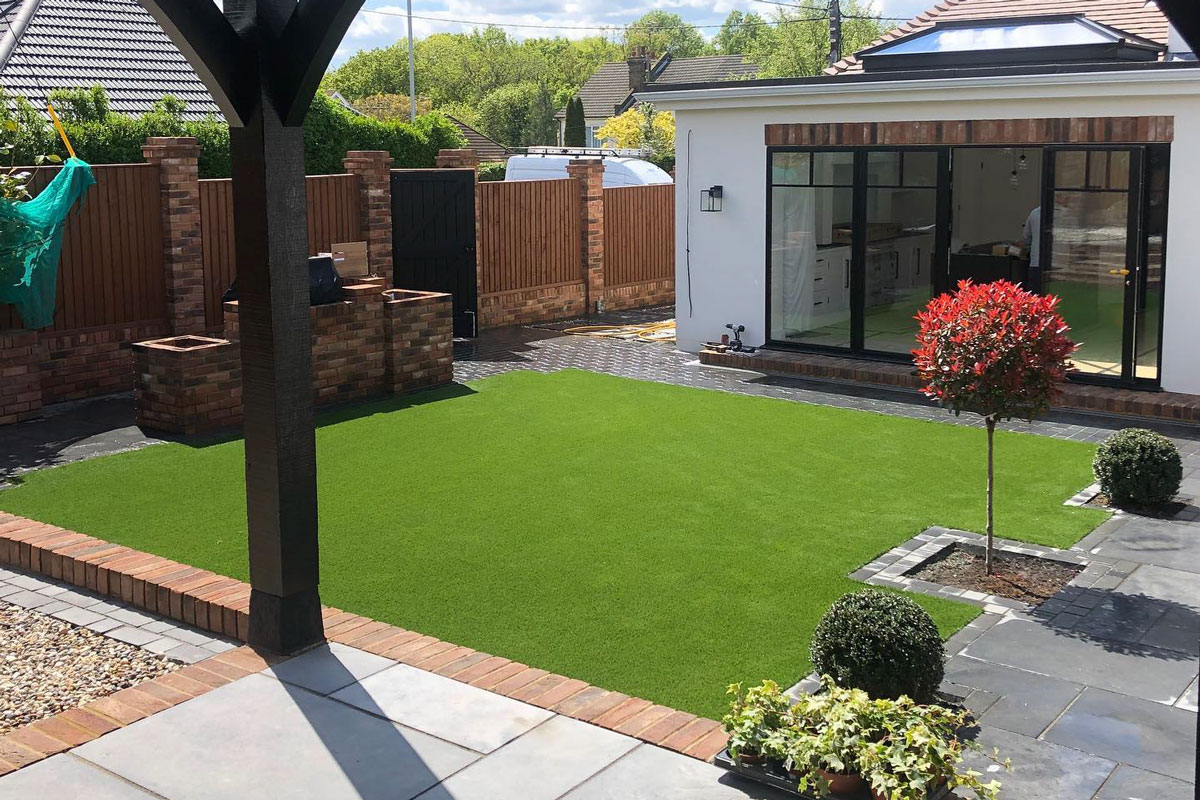 Gidea Park
All of our grass ranges carry a realistic finish and the same 10-year product guarantee. The choice between them comes down to how the space is used, not how it looks.
Shortest, densest pile - the most hard-wearing option for high-traffic areas and dog-heavy gardens.
View Product → Most PopularThe balanced all-rounder we recommend for most residential gardens and commercial landscaped areas.
View Product →Softest, most luxurious pile - well suited to lower-traffic show areas and premium residential lawns.
View Product →Block Paving, Resin Bound Gravel & Timber Decking
These three sit closest to a traditional slab patio in look and feel, while each solving a different one of the problems slabs are prone to.
Block Paving
Small interlocking blocks laid in a pattern, available in a wide range of colours. More resistant to individual cracking than large slabs, since a damaged block can be swapped out on its own. It still needs occasional weed treatment between joints and, on driveways, periodic re-sanding to keep the blocks locked in place.
Resin Bound Gravel
Aggregate mixed with resin to form a smooth, porous, slip-resistant surface. Rainwater passes straight through rather than pooling, which suits driveways and pathways that need to stay usable in wet weather. Colour and finish can be matched to a property's exterior, and it needs only an occasional rinse to stay looking sharp.
Timber Decking
Hard or softwood boards, stained or painted to suit. The natural material gives a warmer, softer look than paving and works well on raised or sloped sites where slabs aren't practical. It needs annual staining or oiling and occasional board replacement to prevent rot, warping and slipperiness in damp weather.
Tarmac, Composite Decking & Bark Chippings
These three cover the remaining common alternatives - two aimed more at practicality and low upkeep, and one suited to informal or naturalistic garden zones.
Tarmac
A mix of asphalt and aggregate, typically black, giving a smooth, industrial finish. Durable and low-maintenance, which is why it's the default choice for commercial car parks and larger driveways rather than domestic patios. It can soften and rut in extreme summer heat and needs resealing every few years to prevent cracking.
Composite Decking
Boards made from recycled plastic and wood fibre, giving the look of timber decking without the annual staining. It resists rot, warping and splintering far better than natural wood, at a higher upfront cost than timber - a trade a lot of homeowners are happy to make for the reduced upkeep.
Bark Chippings
A low-cost, informal surface suited to borders, play areas and rustic garden zones rather than a main patio. It needs topping up every year or two as chippings decompose and compact, and isn't suitable for furniture or areas with heavy foot traffic.
Residential vs Commercial Considerations
The right surface often depends as much on who's using the space as what it looks like. Domestic gardens and commercial sites tend to prioritise different things.
| Factor | Residential Priority | Commercial Priority |
|---|---|---|
| Appearance | Matching the property's style and increasing kerb appeal | Consistent, presentable green space that reflects on the business |
| Maintenance resource | Homeowner's own time at weekends | Grounds-maintenance budget, often on a recurring contract |
| Foot traffic | Family and pet use, generally moderate | Higher and more constant, especially around entrances |
| Drainage requirements | Standard garden fall away from the house | Often governed by planning conditions on larger sites |
| Typical driver | Reducing upkeep and improving usability | Reducing ongoing grounds costs while keeping a professional appearance |
Artificial grass tends to score well against both sets of priorities, which is part of why it's become the default swap-out for tired paving on both residential and commercial jobs we're called out to across Essex.
Groundwork That Makes Any Surface Last
Whichever alternative you choose, the surface itself is only half the story. Most of the problems that make paving slabs fail - sinking, pooling, cracking - come down to what's underneath, and that's just as true of every alternative on this list.
This is why we follow the same rigorous installation process on every artificial grass job, regardless of size - the groundwork is what determines whether a surface lasts fifteen years or starts causing problems within one wet Essex winter.
Cost & Long-Term Value
Upfront cost is only part of the picture. The figures below are general industry guide ranges rather than a quote for your specific site - actual pricing depends on size, ground condition and access.
| Surface | Relative Upfront Cost | Ongoing Cost Over Time |
|---|---|---|
| Artificial Grass | Moderate | Very Low - occasional brush and rinse only |
| Block Paving | Moderate to High | Moderate - periodic re-sanding and weed treatment |
| Resin Bound Gravel | Moderate to High | Low - occasional rinse |
| Timber Decking | Moderate | High - annual staining or oiling |
| Tarmac | Low to Moderate | Moderate - resealing every few years |
| Composite Decking | High | Low - occasional cleaning only |
| Bark Chippings | Low | Moderate - annual topping up |
Every Site Is Different
Ground condition, access, drainage and existing surfaces all affect the real cost of any of these seven options - which is why we always recommend a free site visit over relying on a generic online estimate. For artificial grass specifically, our cost calculator gives a useful starting figure for your own garden.